Scaling What Works
Annual Progress Update
Annual Progress Update
As we enter 2026, we’re committed to our mission of helping save lives – by scaling what we know works. By expanding proven solutions to more healthcare workers and facilities, we’re working to ensure more people receive timely, high-quality care when it matters most.
We’re proud to share this progress.
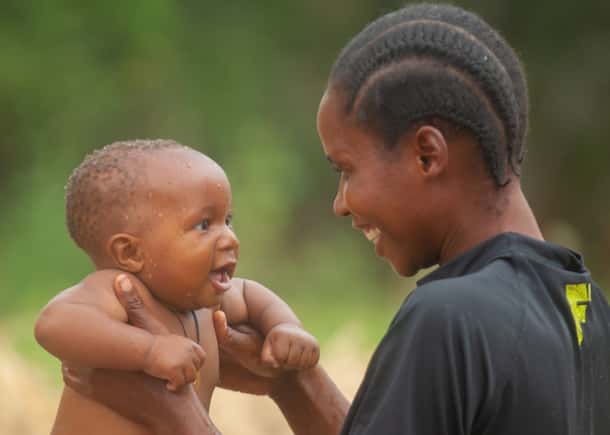
A woman dies every two minutes from pregnancy or birth complications. Maria could have been one of them.
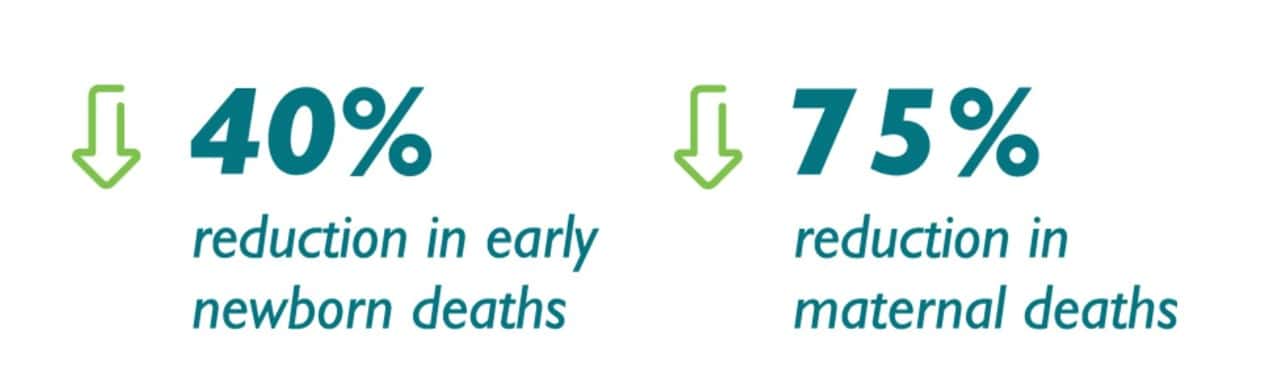
A landmark study published in the New England Journal of Medicine this February showed a 40% reduction in early newborn deaths and a 75% reduction in maternal deaths after the implementation of the Safer Births Bundle of Care program — results that made global headlines. The program is now implemented in 140 health facilities in Tanzania.
In 2025, the program also expanded beyond Tanzania to two states in Northeastern Nigeria implemented by the Clinton Health Access Initiative and Norwegian Church Aid. In these settings with extremely high maternal and newborn mortality, lives are already being saved. A new collaboration with UNICEF will further expand the program to three additional Nigerian states.
This month, the Global Financing Facility launched their new strategy, Transform 2030, introducing a challenge program to support scale up of proven service delivery innovations like the Safer Births Bundle of Care.
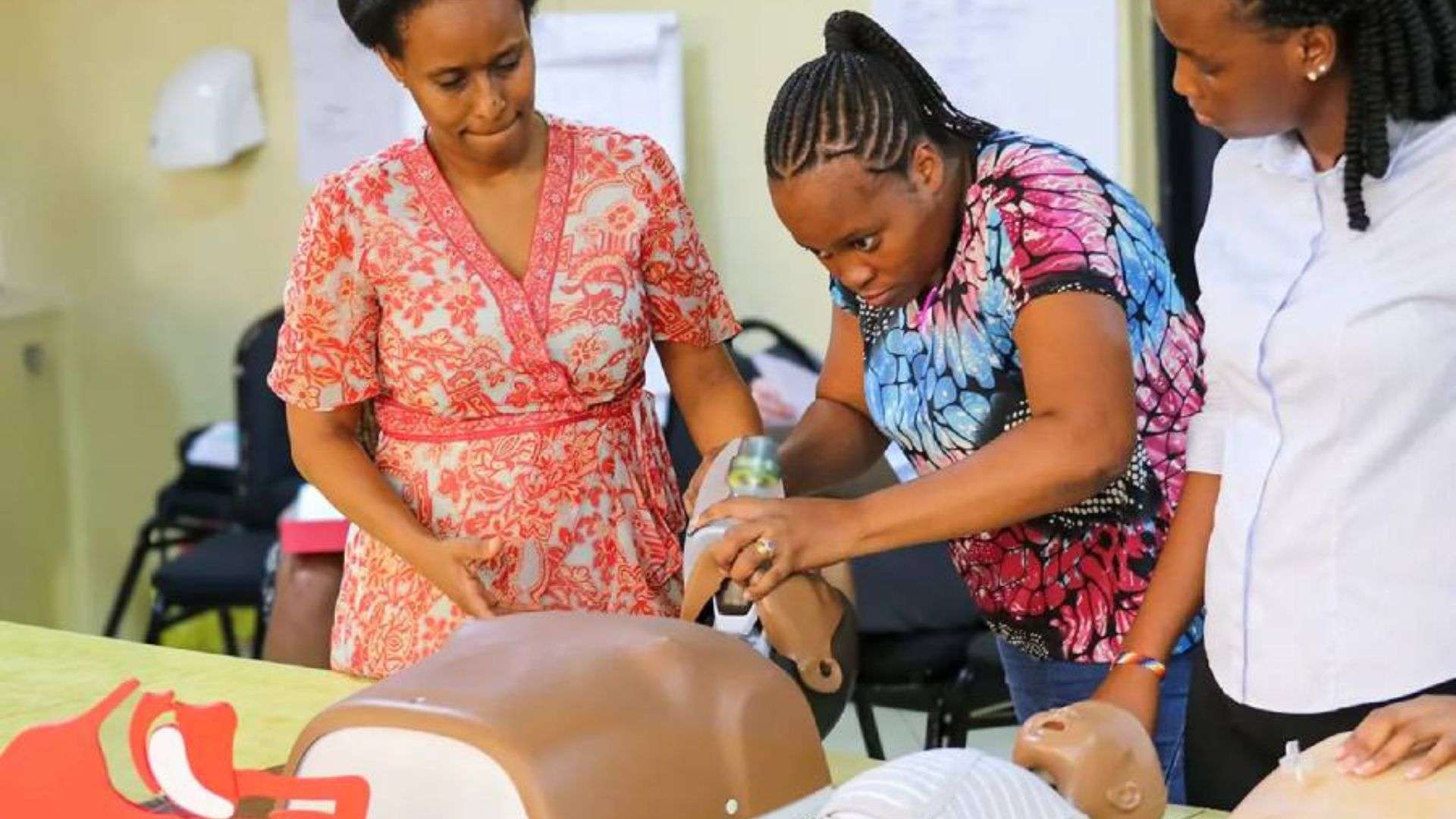
Another exciting development in 2025 was the expansion of our work to basic emergency care. Together with WHO, WHO Academy, WHO Foundation, International Red Cross, and professional emergency care associations, we are supporting the scale-up of the WHO Basic Emergency Care (BEC) program. A new more scalable model with hybrid training, a portable Emergency Care Learning Lab, and on-site low-dose high-frequency training has the potential to halve costs and double impact.
To support this scale up, Laerdal Global Health has committed $12.5 million to the WHO Foundation’s Lifeline Fund, with the ambition to raise matching funds up to $25 million. The goal is to implement the Basic Emergency Care program in 1,000 hospitals across five African countries over the next three years, with the potential to help save up to 50,000 lives each year.
Through related implementation research, the aim is to establish a strong foundation for expansion to additional countries with the potential to help save millions of lives in the years ahead.
To help accelerate progress toward 2030, the Laerdal family is launching the Laerdal Scale Up Fund. With a commitment of USD 100 million over the next two to four years, the fund will support a select number of programs with proven results at small scale expand to larger multi-site implementation and generate robust evidence on impact, cost-effectiveness, and best practice implementation.
The fund is designed to catalyze and de-risk scale-up, enabling governments and partners to take successful programs to national or global scale over time. It is not intended to finance full national or global roll-out, but rather to support the critical transition from proof of concept to scalable, evidence-backed delivery models.
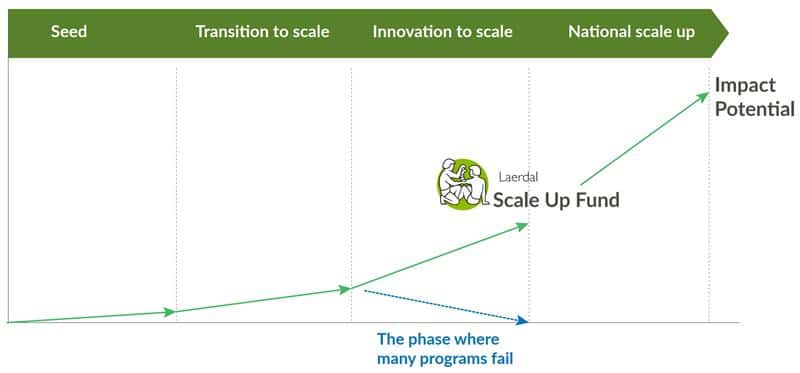
Proposals for candidate programs will be solicited by invitation and assessed by an independent expert committee.
Fifteen years ago, Laerdal Global Health was established to help address some of the world’s most urgent global health challenges. This progress has only been possible by collaboration with partners and governments, but most importantly by the work of healthcare providers on the frontline of care. As we move toward 2026, we’re grateful to continue this work together - strengthening health systems and helping save more lives.